




Hurricane Window Installation in Block vs. Wood-Frame Homes
For hurricane window installation, the wall around the window matters almost as much as the window itself. A concrete-block home and a wood-frame home can use the same impact-rated window, but they may need different anchors, opening repairs and waterproofing details. Ordering a good window is only part of the job. It still has to be attached to something that can carry the load.
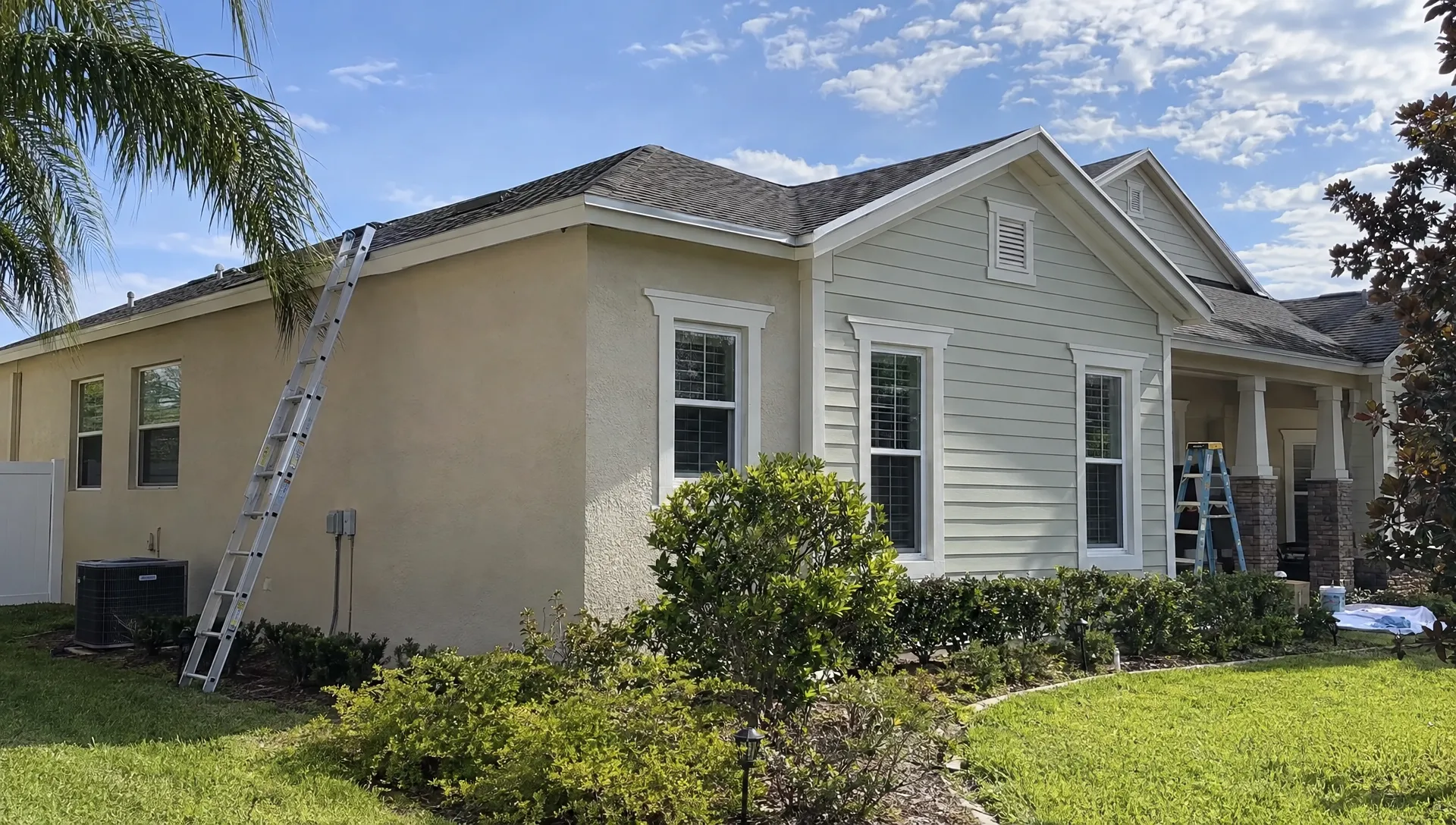
Here in Central Florida, appearances can be misleading. Stucco can cover concrete block or wood framing, and an addition may have different construction from the original house. That matters when someone measures your openings and prepares an estimate.
Before comparing prices, understand what the installer plans to fasten into, how water will drain and what happens if damaged material turns up during removal. Those details usually tell you more than a brochure with a particularly confident-looking hurricane on it.
How hurricane window installation differs by wall type
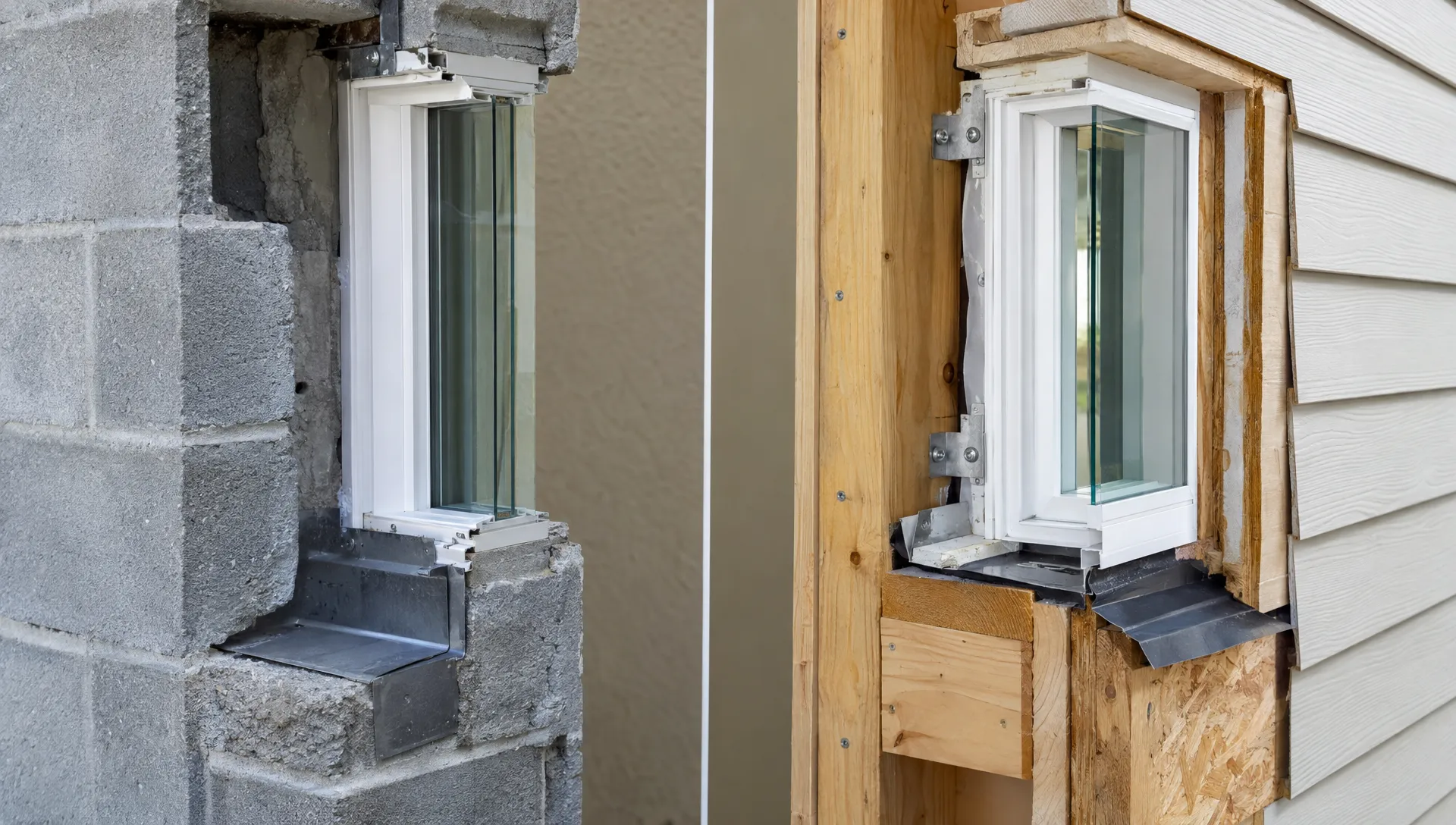
The basic goal is identical: transfer wind pressure from the complete window assembly into the building while managing rain around the opening. The attachment method changes with the supporting structure.
| Installation detail | Concrete-block home | Wood-frame home |
|---|---|---|
| Structural attachment | Approved attachment to masonry, concrete or an adequately anchored buck | Approved attachment to sound structural framing or an engineered supporting assembly |
| Common concealed problems | Deteriorated bucks, cracked masonry or unsuitable anchor locations | Rotted framing, damaged sheathing or failed flashing |
| Fastener considerations | Masonry condition, approved embedment and edge distances | Framing condition, approved penetration and edge distances |
| Water management | Coordination with the sill, stucco and surrounding wall finishes | Coordination with flashing, the weather-resistive barrier and exterior cladding |
| Potential repair work | Buck replacement, masonry repairs or stucco restoration | Framing, sheathing, flashing or siding repairs |
Neither construction type automatically guarantees a better result. Sound wood framing can support a properly designed installation. Concrete block can still have a deteriorated wood buck hiding behind the old frame.
The important question is not simply “block or wood?” It is “what approved assembly connects this window to this particular opening?”
Start with the complete impact-rated assembly
A proper hurricane window installation starts with the approved window system, not just a piece of laminated glass. Impact resistance depends on the glass, frame, hardware and attachment working together.
Laminated glass has an interlayer that helps retain broken glass after an impact. That does not make every laminated-glass window suitable for hurricane protection. The assembly must have the required impact and pressure performance for its location and use.
Look for the exact product in the Florida Product Approval system, or obtain other acceptance documentation recognized by the permitting authority. Confirm that the documents cover the proposed size, configuration, substrate and installation method.
Design pressure is not a simple miles-per-hour promise. Required pressures depend on factors such as the building's location, height, exposure and opening position. A window acceptable in one opening may not meet the requirements of another.
Likewise, replacing ordinary glass with laminated glass does not automatically turn an existing frame into an impact-rated assembly. Standard storm windows are not an equivalent substitute either. Approved shutters may provide another protection option, but they have their own attachment and deployment requirements.
Concrete block: check the buck and the masonry
A buck is material installed around an opening to help receive or position the window. Many block homes have wood bucks, although the specific arrangement varies.
For hurricane window installation in block construction, the installer must establish whether the approved detail attaches the window directly to masonry, through a buck into masonry or to a structurally adequate buck assembly. These approaches are not interchangeable.
A thin wood strip attached with a few old nails should not be assumed capable of carrying the window's wind loads. If the approved design relies on the buck, its material, dimensions and connection to the wall matter too.
Masonry anchors also need the conditions required by their approval. Hollow block, solid concrete and grouted masonry are different substrates. Anchor location, spacing, embedment and distance from an edge all affect the connection.
The opening should be checked for deteriorated wood, damaged masonry and previous repairs that interfere with the specified attachment. Stucco is an exterior finish, not a substitute for structural anchorage.
This is why “we always use these screws” is not a complete installation plan. Familiarity is useful. Matching the approved detail is better.
Wood framing: sound lumber and flashing come first
Wood-frame openings typically include framing above, below and beside the window. That framing must be sound enough to receive the approved attachment and transfer the loads into the wall.
Successful hurricane window installation in a wood-frame home depends on more than finding wood behind the trim. Screws cannot simply stop in decorative trim, thin sheathing or deteriorated lumber unless a specific approved design provides for that assembly.
Water damage often starts at lower corners, where failed flashing or sealant can let moisture reach the sill and adjacent framing. Painting over the stain does not restore the wood's strength. Unfortunately, neither does ignoring it with enthusiasm.
If damage is found, the repair scope should address the affected structural material and the reason it became wet. Installing a new window over an unresolved leak can hide the problem rather than fix it.
The water-management details also need to connect with the home's existing wall system. Depending on the product and construction, that may involve flashing at the sill, jambs and head, integration with the weather-resistive barrier and repairs to surrounding cladding. A perimeter bead of caulk is not a replacement for that work.
Can a retrofit installation work in either home?
Yes, but the word retrofit needs clarification. Contractors sometimes use it to mean replacing windows in existing openings with limited disturbance. Others mean inserting a new window while retaining part of the old frame.
For hurricane window installation, keeping existing materials is acceptable only when the approved installation and their condition support it. A retained frame cannot be treated as a structural shortcut. Nor should concealed decay be left in place simply to protect a clean-looking stucco edge.
A less invasive replacement can make sense when the opening is sound, the approved attachment is achievable and water-management details can be completed correctly. More extensive removal may be necessary when those conditions are missing.
Our discussion of what retrofit windows actually require explains why accurate measurements and structural details matter even when the exterior finish stays largely intact.
The right question is not whether retrofit is always good or always bad. Ask what stays, what comes out and how the new assembly will be secured and sealed.
What the installation process should include
Homeowners do not need to memorize anchor schedules. You should, however, know what a responsible installation process looks like. The exact sequence depends on the approved product, wall construction and local inspection requirements.
Survey the openings and confirm the paperwork
Before ordering, the contractor should verify dimensions, identify the wall construction and establish the required product performance. Larger openings, joined window assemblies and unusual existing conditions may need additional design work.
Permits are generally required for window replacement in Florida. The local building department determines the applicable requirements, including whether the proposed scope triggers related work. Do not assume a neighbor's approval settles your project.
Planning hurricane window installation should also include HOA or condominium approval when applicable. Association approval does not replace a building permit, and a permit does not replace association approval.
The contract should identify who obtains the permit, what documents are included and how concealed-condition repairs will be authorized.
Remove the old window and inspect the opening
Removal should expose enough of the opening to evaluate the materials that will support the new window and permit proper installation.
In a block home, that may mean checking the buck and masonry attachment areas. In a wood-frame home, it may reveal damaged framing, sheathing or flashing. Some conditions cannot be confirmed until the existing unit is out.
Repairs should happen before the new window conceals the opening. Photos are useful here, especially for snowbirds managing work remotely. They document what was found and why additional work was necessary, rather than leaving everyone to reconstruct the conversation later.
Set, anchor and manage water
The window must be positioned square, level and plumb, with shims and support as required by the installation documents. Incorrect positioning can affect operation, weather seals and hardware engagement.
The structural side of hurricane window installation follows the approved anchor type, placement and substrate requirements. There is no universal screw length or spacing that works for every product and wall.
Flashing, sill-water management and compatible sealants should follow the approved details and manufacturer instructions. Drainage paths, including window weep openings, must remain functional.
Insulation foam can have a role when permitted by the manufacturer. It does not replace anchors or flashing. Foam has useful jobs; holding the window in place during a hurricane is not one of them.
Complete inspections and the operating check
Coordinate required inspections before covering work that the inspector needs to see. Once installation is complete, each operable window should open, close and lock correctly.
The finished opening should also be checked for damaged seals, blocked drainage paths and incomplete exterior or interior repairs. Keep the product information, permit closeout records, warranty documents and installation photos.
A passed inspection is valuable, but it is not a substitute for the contractor's own quality checks. Both belong in the process.
Why installation prices differ between homes
There is no reliable rule that block homes always cost more or wood-frame homes always cost less. Access, window size, concealed damage and finish restoration can outweigh the basic wall type.
When comparing hurricane window installation estimates, separate the window price from the work required to make the opening suitable. A lower quote may exclude repairs that another contractor has addressed explicitly.
Look for clear treatment of these items:
- Opening repairs: Identify what buck, masonry, framing or sheathing work is included and how additional damage will be priced.
- Finish restoration: Clarify responsibility for stucco, siding, drywall, trim and paint.
- Project requirements: Confirm permitting, engineering when needed, access equipment, disposal and inspections.
- Product specifications: Match window model, size, operating style, glass configuration and required performance across quotes.
Ask how unexpected conditions are documented and approved before work proceeds. A written change-order process is more useful than a reassuring promise that everything will “probably be fine.”
For a more detailed review of those terms, see our guide to understanding window replacement contracts in Florida.
My Safe Florida Home grants and insurance documentation
If you are pursuing assistance through the My Safe Florida Home program, verify current eligibility, funding availability, eligible improvements and required approvals directly with the program before committing to work.
Do not assume that submitting an application, receiving an inspection or choosing an impact-rated product guarantees reimbursement. Follow the program's current sequence for inspections, authorization, contractor requirements and documentation. Program rules and funding can change.
For grant applicants, hurricane window installation should be scoped around both the building requirements and the program's approved improvements. Tell the contractor about your application early, not after the windows have been ordered.
Insurance savings are a separate question. Ask your insurer whether the planned opening protection and a wind-mitigation inspection could qualify the home for credits. Eligibility depends on the home's protection and the insurer's documentation requirements, not just the presence of several new windows. No contractor should promise a specific premium reduction without that confirmation.
Check the contractor, not just the window label
Verify the contractor's applicable license through Florida's Department of Business and Professional Regulation. Confirm the business name matches the proposal and ask for current insurance documentation appropriate to the work.
Then ask who will supervise the installation and whether the crew has experience with your wall construction. References from similar block or wood-frame projects are more useful than a general statement about years in business.
Warranty language deserves the same attention. Manufacturer coverage and workmanship coverage address different issues. Ask who handles an installation-related leak, how to report a problem and what exclusions apply.
A contractor should be able to explain the attachment and water-management approach in ordinary language. You do not need a lecture on every fastener. You do deserve something more substantial than “don't worry about it.”
Frequently asked questions
Is hurricane window installation easier in a block house? Not necessarily. Sound masonry with straightforward access can simplify the job, but damaged bucks, unsuitable anchor locations or difficult stucco repairs can add work. A sound wood-frame opening may be more straightforward than a deteriorated block opening.
Can impact windows still leak during a hurricane? Yes. Impact resistance does not mean a window is waterproof under every storm condition. Product water-performance limits, installation quality, maintenance and leaks elsewhere in the wall all matter.
Should I crack a window during a hurricane? No. Keep windows closed and locked. Opening a window does not safely equalize pressure and can allow wind and rain inside.
Does a stucco exterior mean my home is concrete block? No. Stucco can cover wood framing as well as masonry. Existing records and inspection of the construction can help establish what is behind it.
Get an estimate that accounts for the opening
Windoor Retro Installations provides window and door replacement across Central Florida, with free project estimates and a lifetime workmanship guarantee.
When requesting an estimate from Windoor Retro Installations, ask to review the proposed attachment method, repair allowances, water-management details and warranty terms. Whether your home is block, wood-frame or a mixture of both, the estimate should account for the wall that is actually there.