




Residential Window Replacement in a Tenant-Occupied Home
Residential window replacement in a tenant-occupied home takes more planning than replacing windows in an empty house. Someone still needs to sleep, work, cook dinner and keep the cat from inspecting the driveway. For landlords and property managers, the job is to improve the property without creating avoidable access disputes, safety problems or days of uncertainty for the people living there.
In Central Florida, that means coordinating tenant notice, permits, weather protection and a realistic installation schedule before the first window comes out.
Can tenants stay home during window replacement?
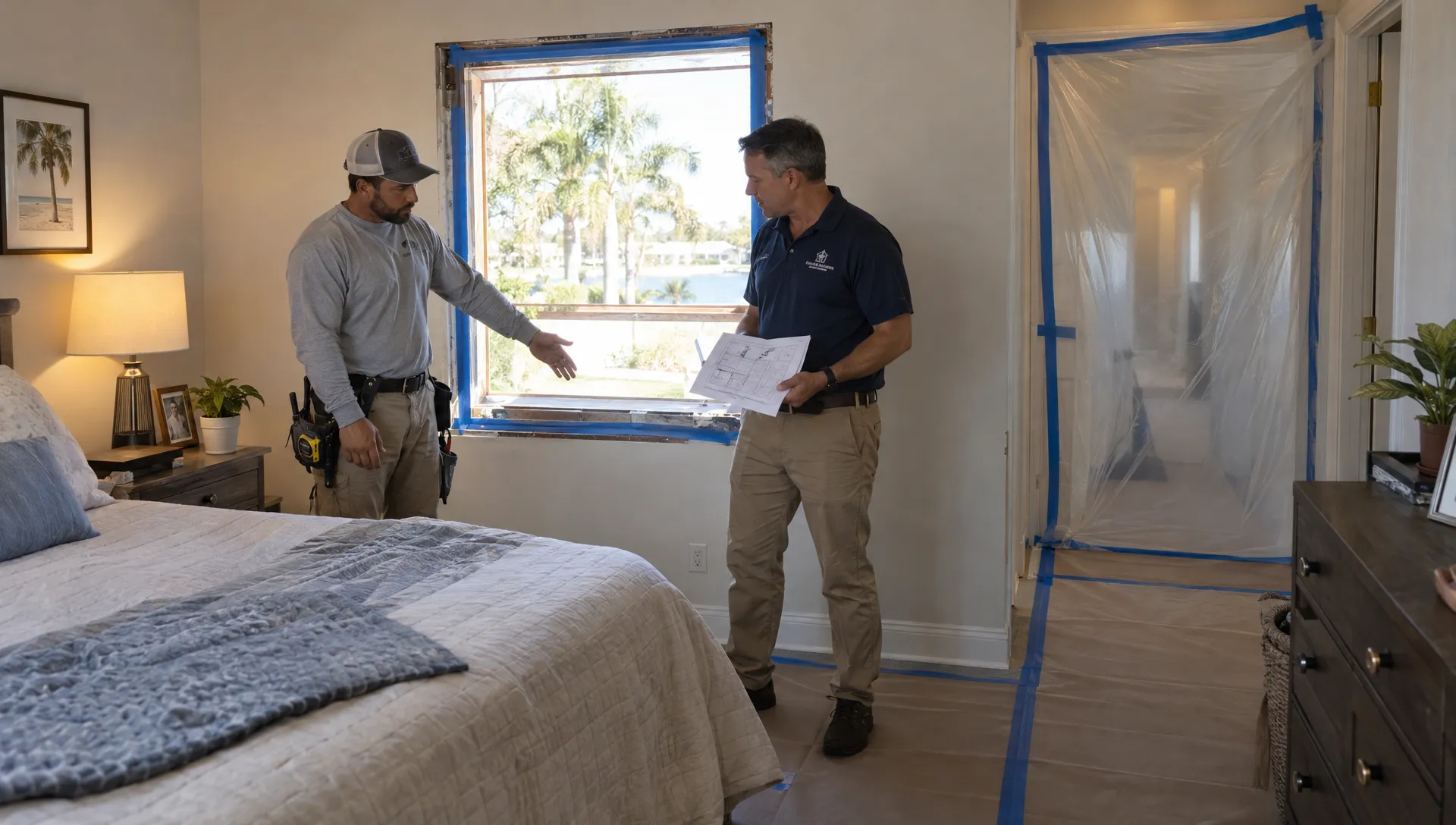
Often, yes, but staying in the home is not the same as staying in the work area. Tenants may be able to use unaffected rooms while installers work elsewhere, provided safe access, sanitation and necessary utilities remain available.
That arrangement becomes harder when the project involves extensive demolition, several bedrooms, lead-safe containment or damage discovered inside the walls. A small home may also have nowhere practical for occupants to stay clear of the crew.
Decide this before installation day. If safe occupancy is uncertain, discuss alternate arrangements with the tenant and contractor. Responsibility for lodging, rent adjustments or other expenses depends on the lease, applicable law and the circumstances. Neither side should settle that question by guessing.
Set the scope for residential window replacement
First, establish whether every affected opening needs a new window assembly. Failed insulated glass, worn hardware or certain sash problems may be repairable without removing the entire frame. Our guide to whether you need replacement windows or just new glass explains that distinction.
For windows that do need replacement, ask which installation method fits the existing construction:
Insert replacement places a new unit within a suitable existing frame. It can reduce disturbance to surrounding finishes, but it does not correct a deteriorated frame or defective water-management details left behind.
Full-frame replacement removes the existing frame and allows the surrounding opening to be evaluated. It generally involves more disturbance and may require additional interior or exterior finish work.
The choice should follow the condition of the opening, product requirements and applicable code. “Less mess” is useful, but not if it means installing over the reason the old window leaked.
Have the contractor identify each opening by room. “Rear bedroom window” is far more useful to a tenant than “Unit 7.”
Follow Florida entry rules, not just the contractor’s calendar
For Florida residential tenancies, Florida Statutes section 83.53 defines reasonable notice for repair entry as at least 24 hours before entry, with reasonable repair hours between 7:30 a.m. and 8:00 p.m. The statute also addresses improvements and other entry circumstances, and prohibits abusing access or using it to harass tenants.
Because residential window replacement may involve repairs, improvements or both, review the lease and applicable access rules rather than treating every project as an emergency. A scheduled upgrade does not become an emergency because the truck arrived early.
Provide written notice through the method required by the lease and applicable law. Identify the planned date, arrival window, rooms involved and a contact for questions. Follow up when the schedule changes, and determine whether fresh notice is needed.
A practical scheduling message might read:
Window installation is scheduled for Tuesday, with crew arrival expected between 8:00 and 9:00 a.m. Work is planned in the living room and rear bedroom. Please keep the agreed work areas accessible and pets secured away from those rooms. Contact the property manager before installation day about access or occupancy concerns. We will notify you if the schedule changes.
That message is a coordination example, not a substitute for a legally sufficient notice. If access is disputed, resolve it through the proper process rather than sending the installer into an argument.
Put the occupancy plan in writing
A workable residential window replacement plan should explain what the tenant can expect, not just when the contractor expects payment.
Agree on the rooms affected each day, access arrangements and who can approve changes. Ask about daytime sleeping schedules, remote work, mobility limitations and health concerns that could affect the plan. Handle disability-related accommodation requests individually under applicable housing requirements.
Be specific about belongings. Tenants need to know how much clearance the installer requires and whether blinds, curtains, alarms or window-mounted equipment must be removed. Assign responsibility for removing and reinstalling those items. Heavy furniture should not become a surprise lifting assignment for an older resident.
Also establish who communicates with whom. The tenant should have one reliable project contact. The installer needs a separate, authorized contact who can approve repairs and expenses promptly. Unless authorized, tenants should not be asked to approve chargeable work on the owner’s behalf.
For absent owners, arrange a local representative if decisions cannot be handled remotely. An exposed opening is a poor place to discover that everyone with purchasing authority has silenced their phone.
Compare quotes for the disruption as well as the windows
The lowest residential window replacement quote may not include everything needed to finish an occupied rental properly. Compare the scope line by line before comparing the totals.
| Quote item | What to confirm |
|---|---|
| Window specifications | Manufacturer, model, dimensions, glass package and required performance ratings |
| Installation scope | Insert or full-frame method, attachment, sealing and treatment of the existing opening |
| Permits and inspections | Who obtains the permit, schedules inspections and supplies completion records |
| Occupant protection | Floor protection, work-area separation, dust control and daily cleanup |
| Finish restoration | Responsibility for trim, stucco, drywall, paint and window coverings |
| Unexpected damage | Documentation, pricing method and written approval before additional work |
| Warranty | Product coverage, workmanship coverage and exclusions |
Confirm who will communicate with the tenant and whether extra mobilizations or phased work affect the price. A room-by-room schedule may be worth discussing even when completing everything together would be simpler for the crew.
Our guide to understanding window replacement contracts in Florida covers other details worth resolving before signing.
Do not order products until required selections and approvals are settled. Depending on the property, that may include HOA or condominium approval, product documentation and local permitting requirements. Association approval and a building permit serve different purposes; one does not automatically replace the other.
Prepare for dust, pets and older-home hazards
Preparation for residential window replacement should reflect who lives in the home and how it was built.
Before the crew arrives, confirm these practical items:
- Work areas: Move agreed belongings, remove fragile items and protect furniture that must remain nearby.
- Children and pets: Keep them outside the work zone, with a plan that still works when doors are opening repeatedly.
- Access routes: Maintain clear paths to exits, bathrooms and unaffected rooms.
- Security equipment: Arrange any necessary alarm-sensor removal, reconnection and testing.
- Health concerns: Discuss dust sensitivity, asthma or other relevant needs before choosing the work sequence.
For pre-1978 housing, ask about lead-based paint before surfaces are disturbed. Paid window replacement is generally subject to the EPA Renovation, Repair and Painting program, unless a valid exemption applies. Window replacement is not covered by the rule’s minor-repair exemption.
Where the rule applies, confirm certified-firm involvement, required occupant information and lead-safe procedures. Occupants must stay outside controlled work areas until the applicable cleaning and verification or clearance steps are complete. A drop cloth alone is not a lead-safety plan.
Sequence installation around weather and daily living
During residential window replacement, the crew should remove only the openings it can manage safely under the conditions that day. There is no universal promise that every window takes a particular number of minutes. Construction type, access, frame condition and required repairs all affect the work.
Ask the contractor how the crew will respond if rain approaches, a replacement unit is damaged or an opening reveals unexpected deterioration. The plan should address temporary weather protection and security without assuming that exposed openings can simply wait overnight.
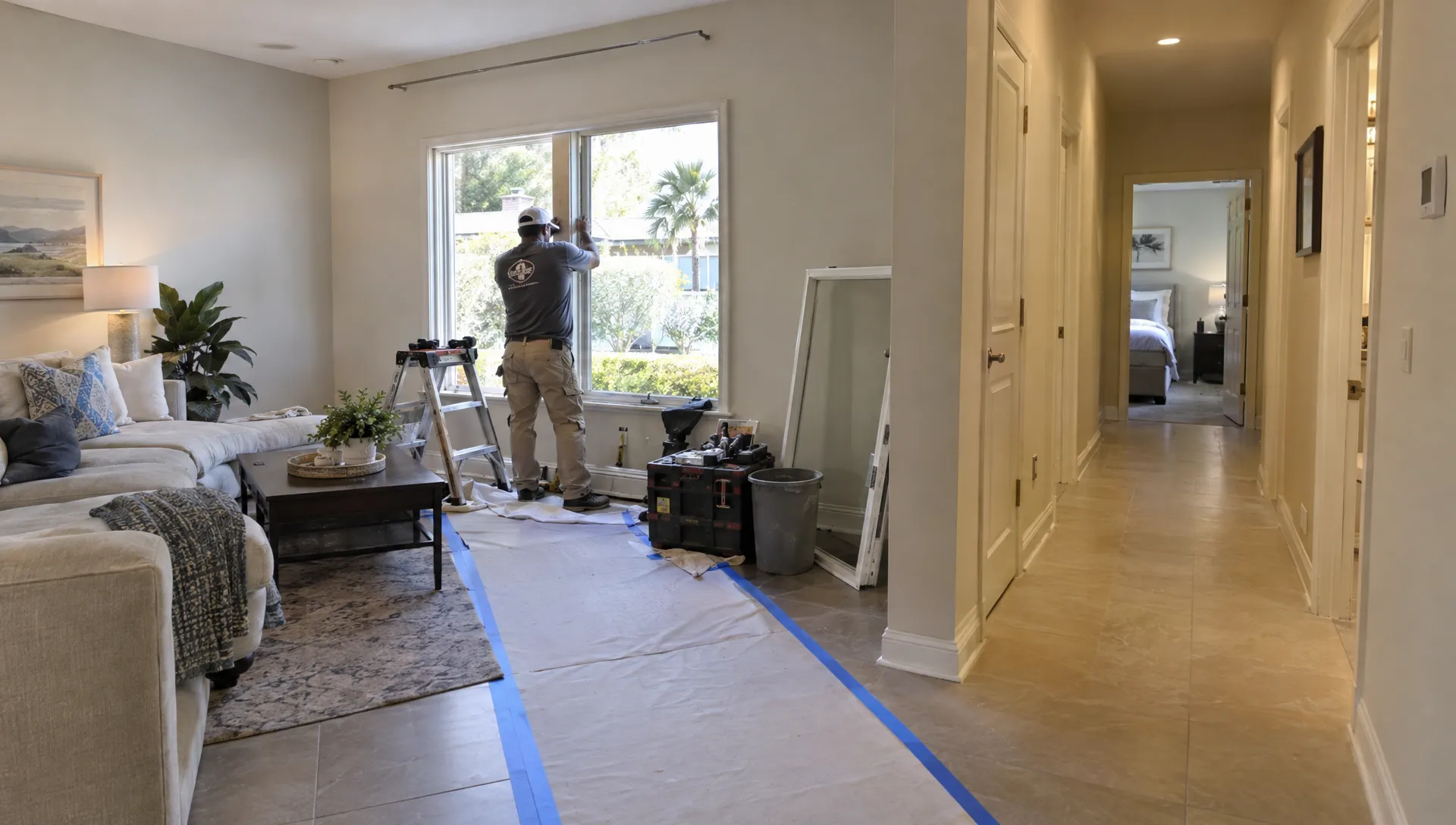
For an occupied property, agree on the condition required before the crew leaves each day. That includes secured openings, safe walking routes, collected debris and a clear explanation of any room that remains unavailable. Keep required exits and emergency escape openings usable, or obtain an appropriate plan before work affects them.
If the schedule slips, tell the tenant promptly. “We should be finished soon” is not useful when someone needs to decide where their child will sleep that night.
Have a decision process for hidden damage
Removing an old frame can expose deteriorated wood, damaged wall materials or evidence of previous water intrusion. The important question is not whether a contractor can promise there is nothing hidden. It is how the project will proceed if something is found.
Require photographs and a written explanation before approving additional repairs. Ask what caused the damage, whether that cause is included in the proposed correction and whether permit or inspection requirements change.
Establish an approval process that avoids leaving the opening exposed while people debate an unexplained invoice. A designated owner representative can authorize a defined amount or scope, with larger changes requiring separate written approval.
Our guide to questions about hidden water damage can help you prepare for that conversation.
Keep the tenant informed about the practical consequences: which room is affected, whether it remains usable and when the next update will arrive. They need an occupancy plan, not the entire change-order negotiation.
Inspect the work before calling the project finished
The final walkthrough for residential window replacement should include operation, security and cleanup, not just a quick look from the driveway.
Open, close and lock every operable window. Confirm that screens and other ordered components are present, finishes included in the contract are complete and debris has been removed. Check any alarm sensors that were disconnected. Have the installer explain normal operation and maintenance without asking the tenant to adjust installation components.
Verify that required inspections are completed and obtain permit closeout documentation when applicable. Keep product information, invoices, warranties and any agreed repair records with the property file.
Photograph the completed openings and surrounding finishes. Give the tenant a straightforward way to report sticking hardware, unexpected water entry or unfinished items. A written punch list with assigned responsibility is better than several people remembering different conversations.
Avoid claiming guaranteed utility savings or an automatic insurance discount. Performance depends on the products, installation and existing conditions. Insurance credits depend on the insurer’s requirements and supporting documentation, not the enthusiasm of the sales presentation.
Budget for the whole project, and verify grant eligibility
A useful residential window replacement budget includes more than the window units. Account for permitting, applicable lead-safe work, finish restoration, approved damage repairs and any occupancy arrangements established for the project.
There is no dependable whole-house price without knowing the opening count, sizes, product specifications and installation conditions. Request an itemized estimate rather than relying on an advertised starting price that may describe a very different job.
Be especially careful with grant assumptions. The My Safe Florida Home program has eligibility and project requirements, including homestead-related requirements. A typical non-homesteaded investment rental should not be budgeted as grant-eligible. Confirm current property eligibility, funding availability and required approval steps directly with the program before starting work or counting on reimbursement.
If financing is part of the plan, compare the total repayment cost and terms, not just the monthly payment. Financing does not make omitted repairs disappear; it only changes how the bill gets paid.
Frequently asked questions
Can a landlord replace windows while tenants are living in the home? Often, yes, provided applicable access requirements are followed and the work can be performed with appropriate occupant protections. Extensive work may require different arrangements. Review the lease and seek Florida landlord-tenant legal advice when access or occupancy obligations are disputed.
How long does residential window replacement take in an occupied rental? The schedule depends on the number of openings, installation method, access, weather and hidden damage. Ask for a room-by-room plan and distinguish installation time from the complete timeline for ordering, permits, finish work and inspections.
Does the tenant have to move all the furniture? Do not assume so. Establish the clearance needed and assign responsibility before installation day. Identify heavy pieces or accessibility concerns early so the contractor and owner can make practical arrangements.
Who pays for a hotel if the home cannot be safely occupied? That depends on the lease, applicable law, the reason temporary relocation is necessary and the circumstances. Resolve the issue before planned work begins, with legal advice when needed. An installer’s scheduling preference does not determine either party’s legal obligations.
Start with an estimate and an occupancy conversation
Windoor Retro Installations provides window replacement and professional installation across Central Florida, with free project estimates and a lifetime workmanship guarantee.
When you request an estimate from Windoor Retro Installations, mention that the property is tenant-occupied. Share the home’s age, known window problems and any access or scheduling concerns. The goal is a clearly scoped job that protects the property while respecting the people who live there.