




What to Ask a Window Contractor About Hidden Water Damage
Before you hire a window contractor, ask one question that rarely makes it into the glossy presentation: “What happens if you remove the old window and find water damage?” The answer should cover more than an extra charge. You need to know who investigates the leak, who repairs the opening and what gets documented before the new window covers everything up.
In Central Florida, wind-driven rain, aging sealant and leaking wall details can leave damage behind an opening that looks perfectly respectable from the living room. A new window does not make rotten framing healthy again. It just makes it harder to see.
What can you inspect before removing the old window?
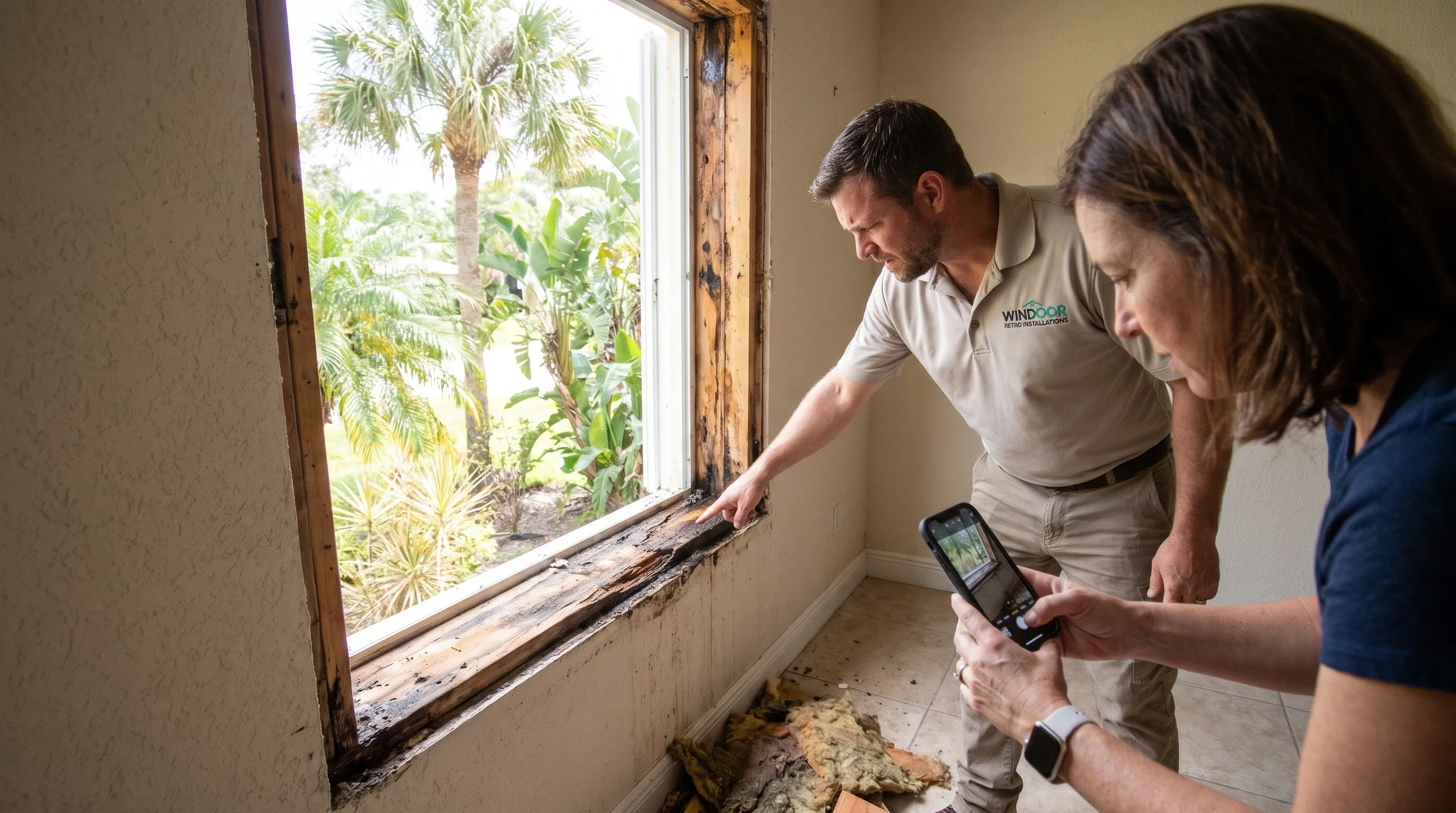
Ask what the estimator can examine now and what will remain unknown until removal. A useful inspection starts with accessible interior and exterior conditions, including trim, nearby wall finishes, window corners and the area below the sill.
These clues deserve attention, but none is a diagnosis by itself:
| Visible clue | What it could indicate | What still needs checking |
|---|---|---|
| Bubbling paint or swollen trim | Repeated moisture exposure | Whether moisture is active and where it originates |
| Staining beneath a window | A window, installation or wall leak | The route water takes into the opening |
| Soft or crumbling wood | Possible decay | How far deterioration extends and whether support or anchorage is affected |
| Musty odor near the opening | A moisture problem somewhere nearby | Concealed conditions and whether specialist assessment is needed |
| Cracks around exterior stucco | A possible entry point | Whether the crack connects to the leak or is unrelated |
A window contractor may use a moisture meter to investigate suspicious areas. Ask where readings were taken and how they were interpreted. Materials, meter settings and recent weather affect results. One dry reading after a sunny week does not prove the wall has never leaked.
A credible estimate distinguishes visible conditions from concealed conditions. Nobody can honestly guarantee the condition of framing they cannot see.
How will you find the source, not just cover the stain?
Water does not always enter where it appears indoors. It may travel from a roof-to-wall connection, an upper opening, cracked stucco or another exterior detail before showing up beneath a window.
Ask: “What evidence tells you the window is the source, rather than the place where the water finally becomes visible?”
The answer might involve reviewing when leaks occur, inspecting exterior joints or arranging controlled water testing when appropriate. Testing should be planned by someone who understands the assembly. Blasting the wall with a hose can produce confusing results or create additional damage.
Your window contractor should also distinguish rainwater intrusion from condensation. Moisture on the room-side glass, fog between panes and wet framing are different conditions with different remedies. Our explanation of what window condensation actually means can help you describe what you are seeing.
Keep a simple record of when the problem happens. Note rain direction, storm intensity, air-conditioning conditions and where moisture first appears. Photographs taken during a leak can be useful even if everything looks dry on estimate day.
“New windows will take care of that” is not a diagnosis. Ask what, specifically, is being corrected.
Can the existing frame stay, or does more of the opening need to be exposed?
Replacement methods vary. Some retain portions of an existing frame or surrounding assembly. Others involve more extensive removal to expose the opening and its attachment surfaces.
Neither approach is automatically right for every house. The deciding factors include the existing construction, product installation requirements, accessibility and condition of the materials being retained.
Ask: “If we leave this material in place, how will you confirm it is sound and that the water-management details still work?”
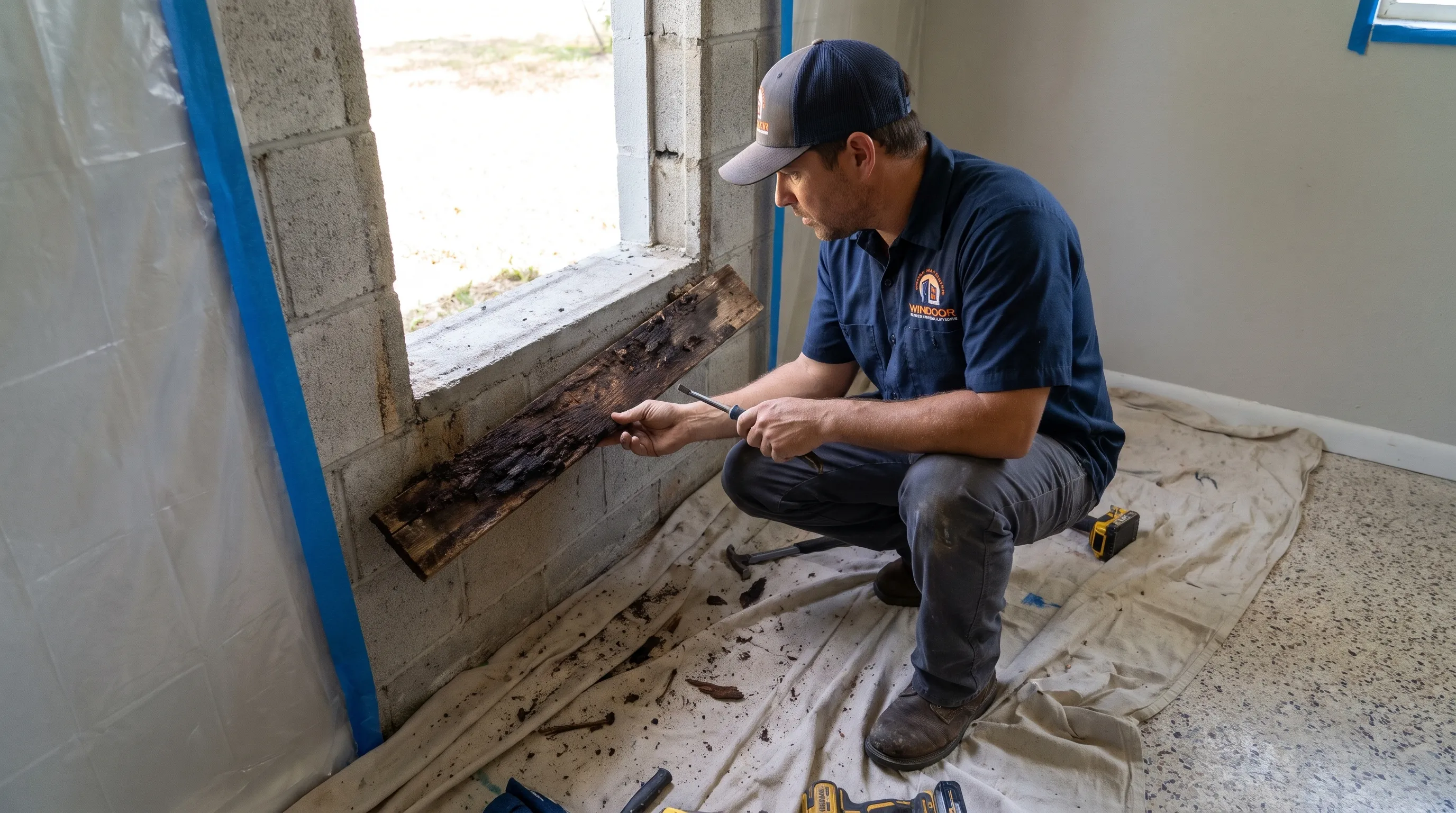
In a concrete-block home, there may still be wood bucks or other anchoring surfaces around the opening. Block construction does not mean there is nothing nearby that can deteriorate. Damage may affect the surfaces that support or secure the replacement window.
A window contractor should explain whether the proposed removal provides enough access to evaluate suspicious areas. If additional removal becomes necessary, find out how that changes the repair scope, exterior finishes and schedule.
More removal is not always better, but leaving questionable material buried behind a replacement is not much of a strategy either. The goal is a sound opening with installation details appropriate to that wall and window, not the smallest possible demolition bill.
Who repairs damaged framing, bucks or surrounding walls?
Before signing, establish who is responsible for work beyond installing the window itself. Replacing a small piece of trim is different from repairing deteriorated framing, damaged sheathing or a compromised anchoring surface.
Ask which business will perform each repair and whether additional qualified trades, permit changes or inspections may be necessary. You can check state license information through Florida’s Department of Business and Professional Regulation, then confirm local requirements with the building department. The license and responsibility need to match the actual scope of work.
Suspected mold deserves a separate conversation. Discoloration alone does not identify mold or tell you its extent. Ask how suspicious material will be handled and when a qualified assessment or remediation professional would be brought in.
The EPA’s guidance on mold and moisture emphasizes correcting the water problem, not merely cleaning visible growth. Covering damp or contaminated materials is not a substitute for resolving the underlying condition.
How will your window contractor price hidden repairs?
Nobody can give an exact price for damage that has not been exposed. What they can provide is a clear process for handling it.
Ask whether the estimate includes any opening preparation or minor repairs, and request a definition of those terms. “Minor” has a remarkable ability to change meaning once the old window is sitting in the driveway.
The contract should explain how additional work is priced and approved. Useful questions include:
- What is already included? Identify removal, routine preparation, disposal, sealing and finish work so those items do not unexpectedly reappear as extras.
- How are concealed repairs priced? Ask whether there are defined unit prices, allowances or a separate written estimate after exposure.
- What evidence will I receive? Request photographs and an explanation of why replacement or repair is necessary.
- When do I approve the charge? Establish a written change-order process before nonemergency additional work proceeds.
- What happens while I decide? Clarify temporary weather protection, any associated charges and how the schedule will be handled.
A contingency allowance is not the same as unlimited permission to spend it. The agreement should state how actual costs are documented and what happens to unused amounts.
Before your window contractor starts, settle how authorization will work if you are traveling or live elsewhere part of the year. Photos are helpful, but they should accompany a written scope and price, not replace them. Our guide to understanding Florida window replacement contracts covers the broader agreement details worth reviewing.
What must happen before the opening gets covered again?
Ask for the sequence, not just the name of a sealant.
The repair needs to address the entry point, remove or repair unsuitable materials and leave an opening capable of supporting the approved installation. Wet materials that remain should be evaluated and dried appropriately before enclosure. A surface that feels dry is not necessarily dry throughout.
Then ask how the replacement connects to the wall’s water-management system. Depending on the construction and product, that may involve sill drainage, flashing, perimeter seals and connections to an existing water-resistive barrier.
There is no universal “caulk everything” recipe. Intended drainage paths and window weep openings must not be blocked, and installation must follow the applicable product instructions, approvals and code requirements.
Ask your window contractor what checks will be completed before interior trim or exterior finishes hide the work. That might include repair photographs, moisture checks where warranted and any required inspections. Whether water testing is appropriate depends on the project and assembly.
Also establish how the opening will be protected if rain arrives or repairs delay installation. An open wall needs a weather-protection plan, not an optimistic look at the forecast.
What documentation and warranty terms will I receive?
Request a record that shows what was found, what was approved and what was repaired. Useful photographs show both the overall opening and close-ups of damaged areas, followed by the repaired condition and water-management details before they disappear behind finishes.
For a remote owner, those records may be the only practical opportunity to review concealed work. For an owner preparing to sell, they can also help explain the repair later without relying on memory.
Ask how warranty responsibility is divided between the window manufacturer, installer and anyone performing related wall repairs. Product coverage and workmanship coverage are not interchangeable.
Your window contractor should explain how a future leak would be investigated, including what happens if the source turns out to be outside the installation scope. Ask about reporting procedures, exclusions and any separate warranty on repair work. A long warranty headline is not a substitute for readable terms.
For context on the installation scope surrounding those repairs, review what window installation services should include. Cleanup matters, but documentation of the work you can no longer see matters more than a clean windowsill.
Could hidden damage affect a My Safe Florida Home project?
If you are applying for or participating in the My Safe Florida Home program, keep grant eligibility separate from the repair agreement.
Do not assume that concealed rot repair, mold-related work or surrounding wall restoration will be reimbursable simply because it is discovered during a window project. Confirm the current rules, eligible improvements, documentation requirements and approval sequence through the official My Safe Florida Home program before authorizing work or relying on reimbursement.
Ask your window contractor to distinguish the proposed mitigation improvement from related repairs in the estimate and any change orders. That makes the costs easier to review without pretending every necessary expense automatically qualifies.
If a discovery changes the approved project, contact the program before proceeding with that change. Neither the installer nor the homeowner should have to guess about someone else’s reimbursement rules.
Frequently asked questions
Does hidden water damage mean every window needs replacement? No. Damage at one opening does not establish the condition of every other opening. It does justify checking similar locations, especially where construction details or leak patterns repeat. Repair and replacement recommendations should follow the findings.
Can new windows be installed over rotted wood? Rotted material should not be relied on for required support or anchorage. A qualified professional needs to determine the extent of damage and the appropriate repair before installation. Covering decay with trim does not restore its strength.
Should I stop the project if damage is discovered? Pause the affected work long enough to document the condition, understand the repair and authorize the next step. The opening still needs protection. Extensive structural damage or suspected contamination may require additional qualified professionals before work continues there.
Can a window contractor guarantee there is no hidden damage before removal? Not honestly when relevant materials are concealed. A reasonable pre-installation inspection can identify warning signs, but the contract should still explain what happens if removal reveals something unexpected.
Get the hidden-damage plan before installation day
When requesting an estimate, describe any past leaks and ask for the concealed-damage procedure in writing. Clear answers now are more useful than reassurance after the opening is exposed.
Windoor Retro Installations provides free estimates for window and door replacement across Central Florida. Bring these questions to the estimate conversation, along with any leak photos. The goal is a properly repaired opening and a properly installed window, not a better-looking cover for an old problem.