




What to Ask Exterior Door Installers About Rotted Thresholds
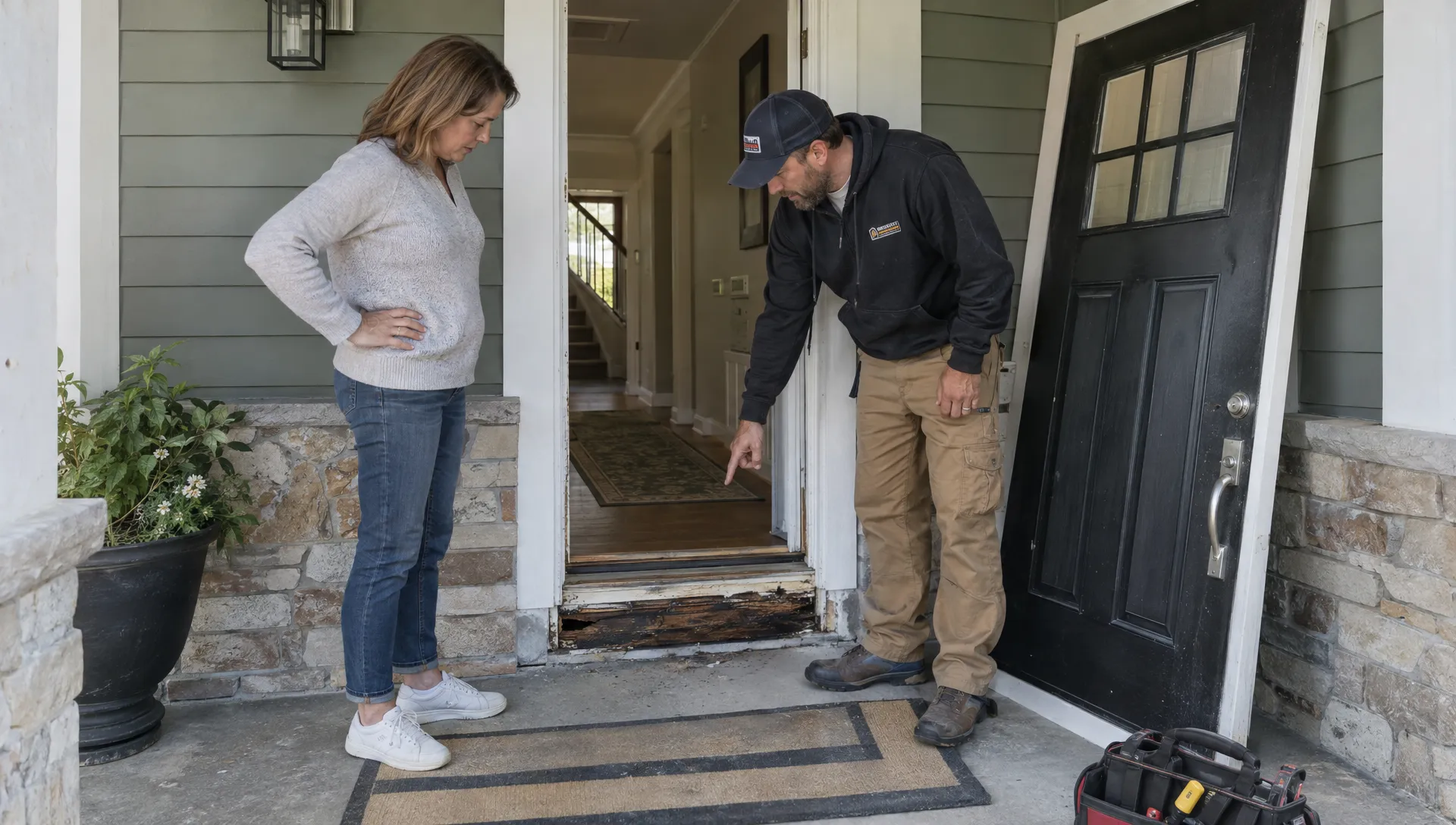
A soft spot under your entry door is not something a new door automatically fixes. Before hiring exterior door installers, ask what is damaged beneath the threshold, where the water came from and what happens if the repair grows after removal. Those answers matter more than the finish on the handle.
In Central Florida, wind-driven rain, sprinkler overspray and wet entryways can keep a small leak working quietly for years. The goal is not simply to cover the damage. It is to restore a sound opening and give water a reliable route outside.
What actually rots beneath a threshold?
The threshold is the bottom portion of the doorway that you step across. Depending on the assembly, there may be wood support beneath it, wood framing beside it or a concrete slab below the opening.
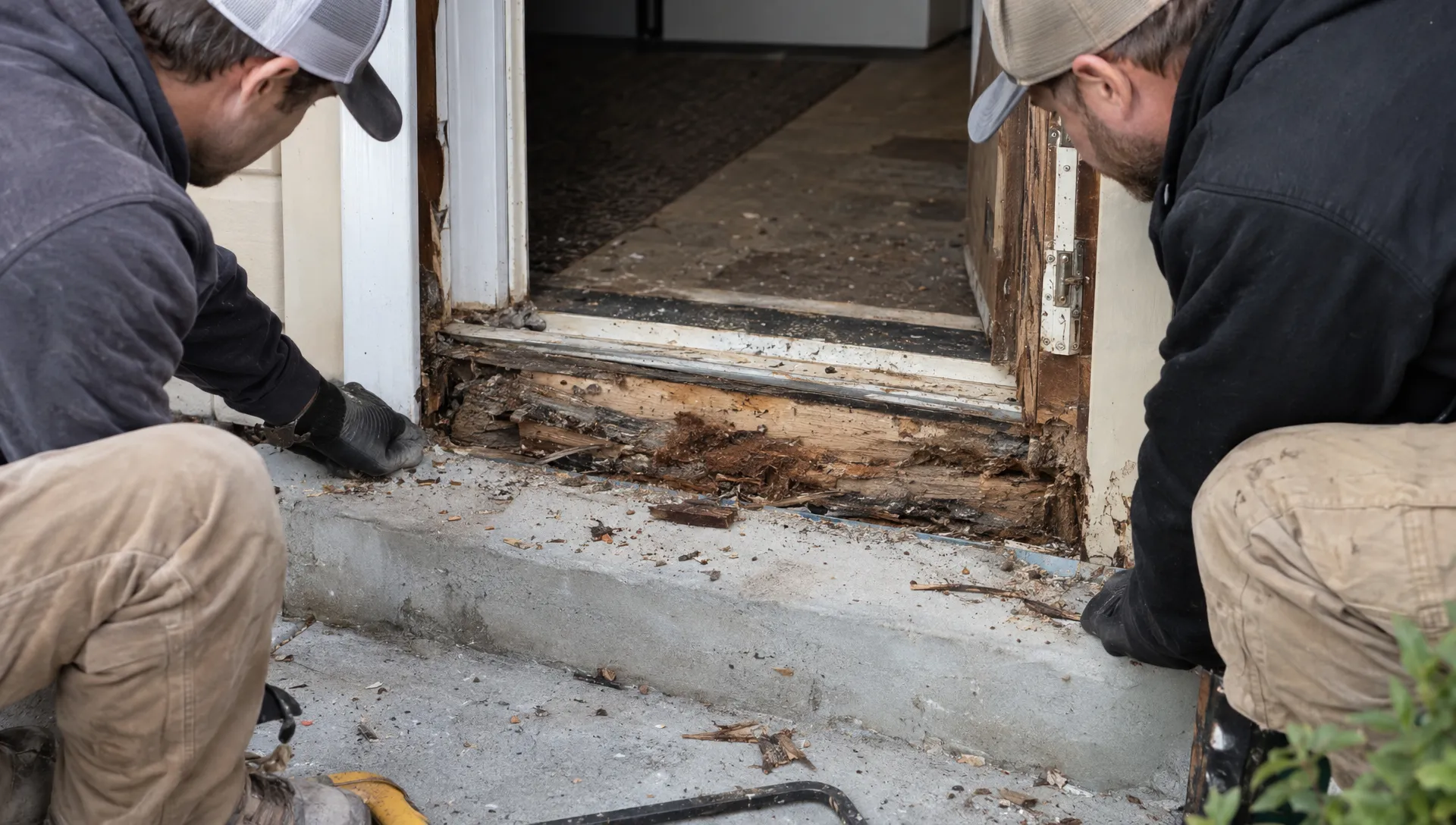
An aluminum threshold does not rot, but wood underneath or alongside it can. A metal surface can look respectable while hiding deteriorated material below. Paint is not structural lumber, despite its occasional use as a substitute.
Ask the contractor to distinguish among a damaged threshold, deteriorated support beneath it, rotten lower door jambs and damage extending into wall or floor framing. Those are different repair scopes.
A spongy step, staining or a loose threshold warrants investigation, but none proves how far the damage extends. The estimate should separate what is visible now from what can only be confirmed after the old assembly comes out.
What should exterior door installers inspect before quoting?
Start with this question: “What do you think caused the damage, and how will you check that?”
The inspection should consider more than the soft spot. Water may enter around the threshold, but it can also travel down from the head of the door, behind trim or through a poorly integrated wall connection. A wet lower corner does not necessarily identify the entry point.
Ask the installer to examine the lower jambs, adjacent flooring, exterior landing and surrounding wall finishes. Sprinklers aimed at the doorway, mulch against wood and paving that directs rain toward the opening deserve attention too.
A moisture meter can help identify damp areas, but it cannot establish the full repair boundary by itself. Concealed surfaces may need inspection after removal. Any water testing should be controlled and appropriate for the assembly, not an enthusiastic pressure-washer demonstration.
If there are mud tubes, insect galleries or suspicious debris, ask whether a licensed pest professional should evaluate the opening. Replacing damaged wood does not resolve an active termite problem.
Can the threshold be repaired without replacing the whole door?
Ask exterior door installers to explain which parts can remain and why. A threshold-only repair may make sense when the surrounding assembly is sound and the replacement component is compatible. It is a poor bargain when the jambs or anchoring points are also deteriorated.
| Finding | What the repair discussion should address |
|---|---|
| Damaged threshold with sound surrounding materials | Compatible replacement, support and sealing details |
| Localized deterioration beneath the threshold | Removal of damaged material, sound replacement support and water management |
| Rotten lower jambs or attachment areas | Frame repair or replacement and reliable fastening |
| Damage extending into floor or wall framing | Expanded investigation and a properly defined structural repair scope |
| Repeated wetting from outside the opening | Correction of the water source as part of the overall plan |
These are discussion points, not a diagnosis from a photograph. Ask the contractor to show you what makes the proposed repair reasonable.
Also ask whether repairing the existing assembly affects its warranty or approved installation configuration. A patched frame and a new door slab do not automatically become a tested, impact-rated door system.
How will the repair keep water out?
Ask how the sill flashing will drain
“Will you caulk it?” is too small a question. Ask how the installation will collect or redirect water that gets past the outermost seal.
Have exterior door installers explain whether the opening needs a sill pan or another approved flashing detail and how that detail connects with the surrounding wall. The answer should reflect the door manufacturer’s instructions, the construction of your home and applicable requirements.
A sill pan is a water-management detail beneath the door assembly. Where used, it needs a planned discharge path toward the exterior. It should not become a little bathtub hidden beneath your new door.
Sealant placement matters as much as sealant selection. Some assemblies require specific sealant locations while drainage paths must remain open. “We seal everything” is not a complete installation plan.
Water entering above the door also needs correction. Better flashing at the bottom cannot excuse an unresolved leak at the top.
Ask what supports and anchors the assembly
The threshold needs appropriate support so normal foot traffic does not cause movement that strains joints and seals. Expanding foam is not a substitute for required structural support or fastening.
Ask what material will replace damaged support, how it will be secured and whether it is suitable for the exposure conditions. “Rot-resistant” does not mean the surrounding framing can stay wet indefinitely.
For an impact-rated replacement, ask how the repaired opening will provide the substrate and anchorage required by the approved installation details. Product approval, fastener placement and sound attachment material work together. A strong door cannot compensate for screws installed into deteriorated wood.
What happens to the price when hidden damage appears?
A contractor cannot see through a closed threshold. An honest estimate can acknowledge that limitation without turning the job into an open-ended bill.
Ask exterior door installers to put the concealed-damage process in writing before work starts. The agreement should explain when work pauses, who authorizes additional repairs and how pricing will be established.
Make sure the written scope addresses:
- Removal and disposal: Whether the old door, threshold, damaged materials and debris are included.
- Repair allowances: What repair work is included and what falls outside the base price.
- Water-management work: Flashing, compatible sealants and any identified drainage corrections.
- Finish restoration: Interior trim, exterior trim, stucco, drywall, flooring transitions and painting responsibilities.
- Change orders: Photos, a description of newly discovered damage and written approval before additional work proceeds.
- Temporary protection: How the opening will be secured and protected if repairs delay installation.
Ask whether unit prices or a defined allowance are practical for likely repairs. A contractor may not be able to provide a firm total for concealed framing damage, but should explain the pricing method.
Our guide to door replacement costs in Florida provides broader budgeting context. For a rotted threshold, compare repair scope rather than just the total at the bottom of the page.
Who performs the repair and handles permits?
Door installation and concealed framing repair may involve different skills or licensing requirements. Ask who will actually remove the assembly, repair the opening and install the replacement. If subcontractors are involved, identify who supervises the work and stands behind it.
Ask exterior door installers what license covers the proposed scope. Verify the license holder through Florida’s Department of Business and Professional Regulation or the appropriate local licensing office. A business registration alone is not a contractor license.
Request evidence of applicable insurance and workers’ compensation coverage or a valid exemption, as appropriate. The names on the proposal, license and coverage documents should make sense together.
Permit requirements depend on the jurisdiction and work involved. Do not assume that replacing an existing door makes the project exempt. Ask who confirms requirements with the city or county, obtains any required permit and schedules inspections.
For a replacement door, also ask how local wind-load requirements and any applicable impact-protection requirements affect product selection. An HOA approval, where needed, is separate from building-department approval.
Does the warranty cover the repair or only the new door?
A door warranty and an installation warranty are not the same thing. Manufacturer coverage generally has its own terms, exclusions and installation requirements. Workmanship coverage addresses a different part of the project.
Ask for the actual documents, not just the word “lifetime.” Find out whose lifetime applies, what work is covered and what conditions or maintenance obligations affect coverage. Confirm whether repair materials and labor are included or treated separately.
Have exterior door installers explain how a future leak would be evaluated. If water appears at the same corner six months later, whom do you contact? Who determines whether the cause is installation, the product or an unrelated wall leak?
Get existing conditions and exclusions documented before work starts. That protects both sides from an argument built entirely around memory.
Keep before-and-after photographs, the approved change orders, product identification and permit records. Part-time Florida residents should also arrange to receive progress photos before repaired areas are concealed. Finished trim makes a poor inspection window.
What should you inspect before signing off?
Walk through the completed installation with the contractor before signing off under your agreement. Any required building inspection is important, but it does not replace your own review of operation, finishes and documentation.
The door should open, close and latch without an unusual shove. Weatherstripping should make appropriate contact without preventing normal operation. The threshold should feel stable under ordinary use, and visible joints should match the intended installation detail.
Ask exterior door installers to show you the completed drainage provisions and explain which openings must remain clear. Do not request extra caulk simply because an intentional drainage opening looks unfinished.
Use this short closeout checklist:
- Operation: Check the latch, deadbolt, hinges and door movement with the installer present.
- Support and finishes: Review threshold stability, trim, transitions and agreed finish repairs.
- Water management: Confirm that flashing and drainage details were completed as specified, using progress photos where concealed.
- Paperwork: Collect warranty terms, product information, maintenance instructions and applicable inspection records.
If the threshold height changed, check how the transition feels underfoot. Raise accessibility or trip concerns before the project is finalized, especially where a household member uses a walker or has limited mobility.
Can My Safe Florida Home help with a rotted threshold?
The My Safe Florida Home program may support qualifying wind-mitigation improvements, including certain exterior-door upgrades under its rules. That does not mean an ordinary rot repair qualifies on its own.
Check current eligibility, funding availability, inspection requirements and grant procedures directly with the program. Confirm the approved improvement scope and any authorization required before work begins. Do not assume that signing a contract or completing a repair makes the expense reimbursable.
If you are considering a qualifying door upgrade, ask exterior door installers to separate the door installation from concealed-damage repairs in the proposal. Then confirm with the program how any necessary opening repairs are treated. That separation makes the scope easier to review without promising coverage that has not been approved.
Insurance savings are a separate question. Ask your insurer what improvements and documentation it recognizes. A grant award or a new door is not, by itself, a promise of a lower premium.
Frequently asked questions
Does a rotten threshold always mean the entire door needs replacement? No. A localized repair may be possible if the remaining door, frame, support and attachment areas are sound. More extensive deterioration or an incompatible replacement threshold can make a full assembly replacement more practical.
Can rotten wood just be covered with a new threshold? Covering deteriorated material does not restore its strength or stop the moisture source. Materials needed for support or anchoring must be sound. Ask for an explanation of what will be removed, what can remain and why.
Can exterior door installers quote the repair from photos? Photos can help with an initial discussion, but they usually cannot establish the full condition beneath the threshold or behind the jambs. A preliminary estimate should state its assumptions and explain how concealed damage will be handled.
How long does a rotted-threshold repair take? Timing depends on the damage, repair materials, permit requirements and whether additional trades are needed. Ask for both the expected installation schedule and the contingency plan if removal reveals more damage. The opening still needs protection if the job cannot be finished that day.
Start with the opening, not the sales pitch
A useful proposal explains what is damaged, how water will be managed and what happens if the hidden conditions are worse than expected. Door color can wait until those questions have answers.
For a Central Florida project, request a free estimate from Windoor Retro Installations. The company provides door replacement and installation with a lifetime workmanship guarantee. Ask to review the repair scope and written guarantee terms alongside the door selection, so you know what you are buying before the old threshold comes out.