




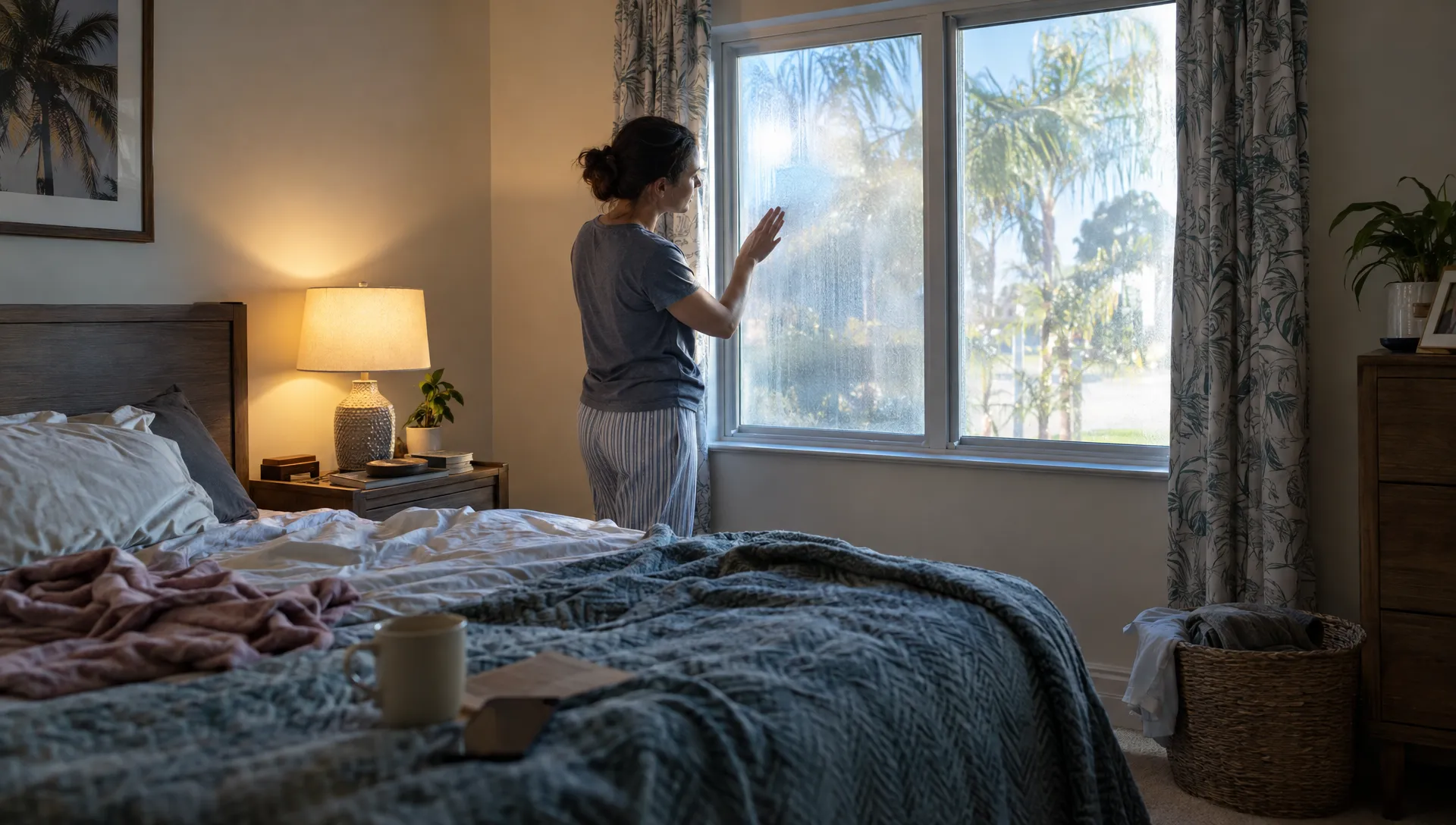
How to Check Replacement Double Glazed Windows for Seal Failure
If your replacement double glazed windows look cloudy, do not assume the entire window needs replacing. First, find out where the moisture actually sits: on the room-facing surface, on the outdoor surface or between the panes. Those three locations point to different problems, and only one strongly suggests a failed insulated glass seal.
The most useful homeowner check is simple: clean and dry both accessible glass surfaces, then look for moisture that remains trapped between them. Keep the inspection at ground level. No foggy pane deserves a trip to the emergency room.
Understand which seal you are checking
A double-glazed window, usually called a double-pane window in the U.S., contains an insulated glass unit, or IGU. Two panes surround a sealed space containing dry air or an insulating gas. A spacer separates the panes, and desiccant helps control moisture inside that space. The Department of Energy explains these glazing components, including gas fills and low-E coatings.
Three separate systems often get called “the window seal”:
- The IGU edge seal keeps the space between the panes isolated from outdoor air and moisture.
- Weatherstripping helps limit air movement around an operable sash.
- Installation seals and flashing help manage air and water where the window meets the wall.
A draft can come from weatherstripping without any failure inside the glass. Likewise, caulking around the frame does not repair an IGU edge seal. Getting that distinction right prevents a surprising amount of unnecessary work.
How to check replacement double glazed windows safely
1. Start with clean, accessible glass surfaces
Choose a window you can safely reach from inside and outside while standing on stable ground. Follow the manufacturer's cleaning instructions and use a clean microfiber cloth to remove surface moisture and residue.
Dry the room-facing glass first. If the cloudy area disappears, you were looking at surface condensation or residue, not proof of a failed IGU seal. Repeat on the outdoor surface only if it is safely accessible.
If you cannot reach the exterior, record the finding as unconfirmed, rather than guessing that the haze is between the panes. Do not lean out of an opening or remove a sash unless its instructions specifically allow safe homeowner removal.
Stop if you see cracked glass, loose glazing or a sash that will not stay supported. Those conditions need professional attention before further handling.
2. Look at the remaining haze from different angles
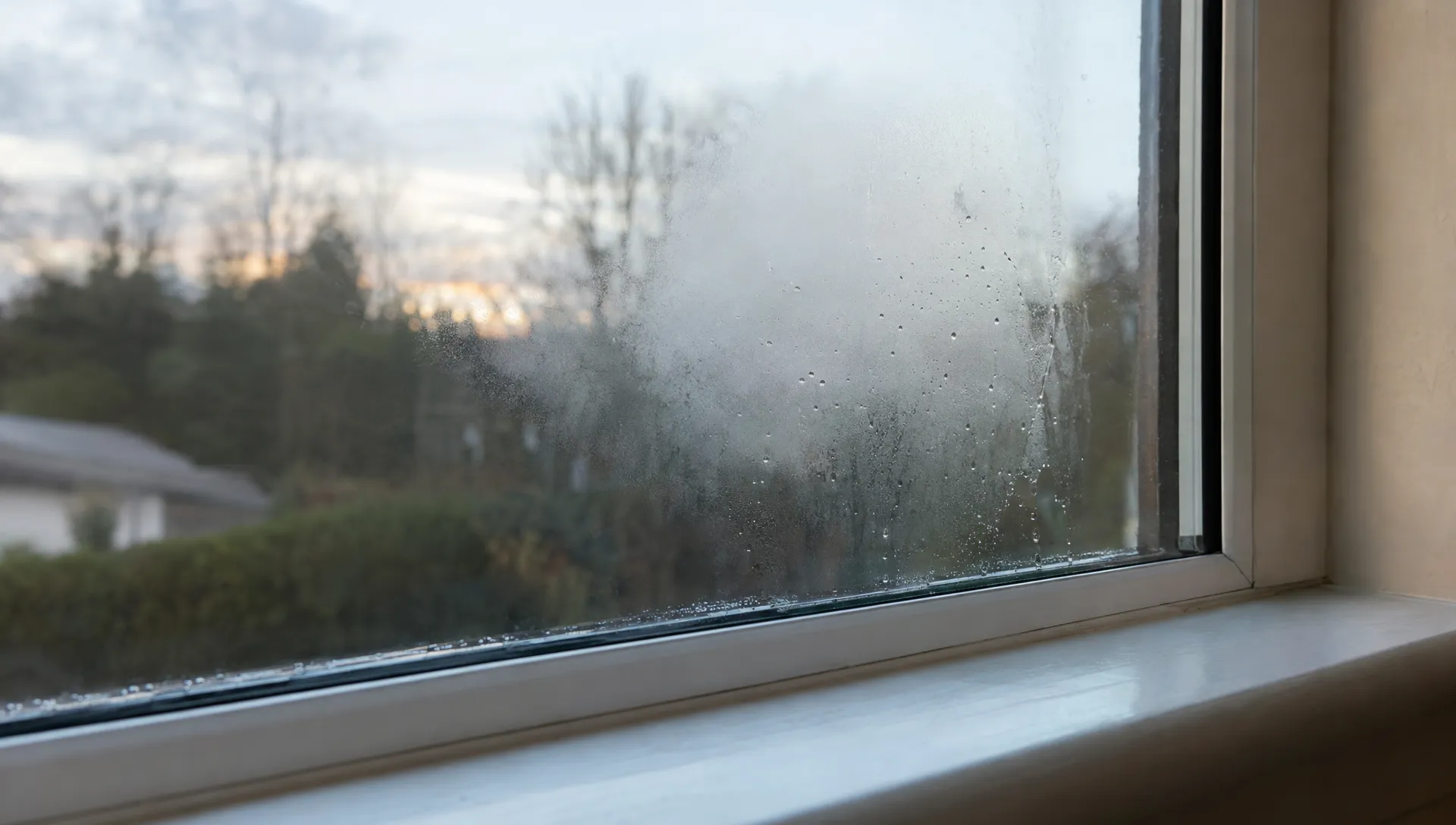
After both accessible surfaces are clean and dry, look straight through the glass and then from an angle. Side lighting can make droplets, streaks or a cloudy band easier to see.
When checking replacement double glazed windows, the strongest visible clue is condensation that remains between the panes after the exposed surfaces are dry. You cannot wipe that moisture away because it is inside the sealed unit.
Look for small droplets, misty patches or dried water tracks in the cavity. These findings support a seal-failure diagnosis, particularly when they return with changing weather.
Uniform tint, rainbow effects and reflections are less useful clues. Coatings, lighting and surface films can create confusing appearances. A flashlight may help reveal haze, but counting reflections does not tell you whether the seal is intact or whether insulating gas remains.
3. Repeat the observation as conditions change
Check the same pane during a humid morning and again later when temperatures change. Photograph it from roughly the same position, with the same cloudy area in view.
Moisture inside an IGU can become visible under one set of conditions and disappear under another. A pane clearing up in the afternoon does not mean its failed seal repaired itself. It may simply mean the moisture is no longer condensing visibly.
Compare nearby windows with similar exposure, too. Outdoor dew across several panes on the same wall is different from recurring internal fog in one isolated unit.
For part-time Florida residents, dated photos from a caretaker can help document an intermittent problem before a service visit.
4. Inspect the surrounding window without taking it apart
On replacement double glazed windows, an internal seal problem can exist alongside unrelated frame or drainage trouble. Check whether the sash opens, closes and locks normally. Look for torn weatherstripping, visible frame damage and staining around the sill.
Notice any obvious spacer distortion or material collecting inside the glass cavity, but do not remove glazing beads or pry at gaskets. The IGU edge seal is generally concealed, so an intact-looking exposed gasket does not prove the unit is sound.
If you find wet trim, soft wood or peeling finishes, investigate that separately. These questions about hidden water damage can help keep an inspection focused on the leak source rather than just the visible stain.
What your observations actually mean
Use this table to sort the findings before requesting a repair quote. It is a screening guide, not a substitute for inspecting the actual window.
| What you observe | What it suggests | Sensible next step |
|---|---|---|
| Moisture wipes off the room-facing glass | Indoor surface condensation | Check indoor humidity, airflow and glass temperature |
| Moisture wipes off the outdoor glass | Exterior condensation | Observe as weather changes; this alone does not prove failure |
| Droplets remain between clean, dry surfaces | Likely IGU edge-seal failure | Request a glazing inspection and warranty review |
| Haze remains, but its location is unclear | Inconclusive finding | Have a professional distinguish internal fog from coatings or residue |
| A draft occurs around the moving sash | Possible weatherstripping, fit or hardware issue | Inspect sash operation and air-leakage paths |
| Water appears on the sill during rain | Possible drainage, installation or other water-entry problem | Investigate promptly rather than assuming the IGU caused it |
Exterior condensation can occur on otherwise sound insulating glass. Interior condensation can also occur without a failed edge seal when humid indoor air meets a sufficiently cool glass surface. Neither condition, by itself, justifies replacing the unit.
Know what a home inspection cannot prove
A visual check cannot measure how much argon remains inside an insulated glass unit. Clear glass does not certify that the original gas concentration or insulating performance is unchanged. Conversely, a higher electric bill does not identify which window, if any, has a failed seal.
Thermal cameras and infrared thermometers also have limits. Sun exposure, indoor airflow, glass coatings and reflections can affect what they show. A temperature difference is not a stand-alone diagnosis of edge-seal failure.
Ask the contractor to identify the evidence: internal condensation, a confirmed cavity deposit, visible damage or another specific finding. “These windows are old” is background information, not a test result.
With replacement double glazed windows, a confirmed moisture-seal failure means the IGU is no longer keeping its cavity dry as intended. It does not establish an exact percentage of energy loss, prove the frame is defective or mean every other unit in the house has failed.
Before you authorize a repair
Document the unit and check the warranty
Photograph the affected pane, the complete window and any accessible manufacturer label or etched identification. Record which room it serves and whether the problem changes with weather. Keep the original installation paperwork if available.
Ask whether the applicable coverage comes from the glass manufacturer, window manufacturer or installer. Product coverage and workmanship coverage are not interchangeable. A warranty may treat replacement glass, labor, service calls and access costs differently.
Avoid drilling, dismantling or applying unapproved treatments before a warranty review. Those attempts can complicate a claim, and they may damage an otherwise repairable window.
Compare repair scopes, not just totals
A sound frame and serviceable sash may allow replacement of the insulated glass unit rather than the complete window. Some window designs require a replacement sash instead. Availability, condition and manufacturer requirements determine the practical option.
If replacement double glazed windows have failed only at the glass unit, ask why a full-frame replacement is being recommended. There may be a legitimate reason, such as frame deterioration or unavailable components, but it should be explained. A full-house quote is not a diagnostic test.
Our guide to deciding between new glass and window replacement covers that decision in more detail. For the immediate quote, request a written scope identifying the affected unit, replacement specifications, labor, disposal and any permit responsibility.
Be cautious with “defogging” promises
Drilling and venting a fogged unit may improve its appearance, but that is not the same as restoring the original factory-sealed construction or insulating-gas fill. Ask exactly what the proposed service restores and what it does not.
Adding caulk around the window perimeter will not reseal the cavity between the panes, either. Do not block drainage openings while trying to solve a problem they were never responsible for.
Florida checks: impact glass and grant expectations
Double-pane glass and impact-resistant glass describe different characteristics. An impact-rated window may include an insulated glass unit, but two panes alone do not establish hurricane protection.
When repairing replacement double glazed windows in an impact-rated assembly, the replacement must match the assembly's required specifications. That can include glass construction, thickness, coatings and the approved glazing method. “It fits the opening” is not enough. Have the contractor verify the applicable product documentation and local permitting requirements.
If you are considering the My Safe Florida Home program, separate the fogging diagnosis from the grant question. A failed glass seal by itself does not establish eligibility for assistance. Check current funding, eligibility, inspection and approval requirements through the official My Safe Florida Home program before committing to work you expect it to cover.
Do not assume a glass repair will qualify for reimbursement or produce an insurance discount. Those determinations require the relevant program or insurer's documentation, not a verbal promise during an estimate.
Frequently asked questions
Does fog between the panes always mean the entire window needs replacing? No. Confirmed internal condensation usually points to an IGU seal problem. If the frame and sash are sound, glass-unit or sash replacement may be possible, depending on the window's design and available parts.
Can replacement double glazed windows have failed seals without visible fog? Yes. A clear pane is not proof that its seal and gas fill remain unchanged. Visible condensation depends on moisture and temperature conditions, so an affected unit may look clear during part of the day.
Can I reseal the glass myself with silicone? Applying silicone to exposed edges does not recreate the sealed, dry cavity inside an IGU. Glass removal also carries injury and assembly-damage risks. Leave that work to a qualified glazing professional.
Is a fogged window an emergency? Fogging alone usually allows time to arrange an inspection. Cracked or loose glass, an unstable sash, active water intrusion or wet electrical components need prompt attention. Do not treat those as ordinary cosmetic fogging.
Get the problem identified before buying the solution
Start with safe observations, clear photos and a request for a specific diagnosis. You need to know whether the problem is inside the glass, around the sash or where the window meets the wall.
For Central Florida homeowners, Windoor Retro Installations offers free project estimates. Bring your photos and warranty paperwork so the conversation starts with the affected window, not an assumption that the whole house needs replacing.